
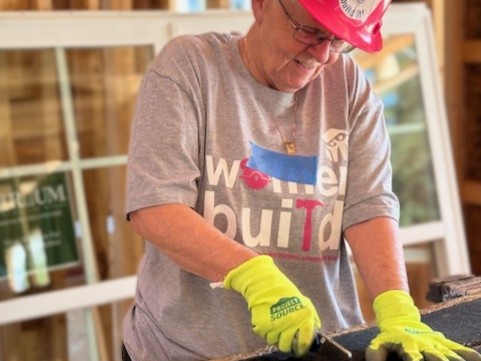
Retirement doesn’t mean the end of contribution — for many older adults, it marks the beginning of some of the most fulfilling and impactful years of life. At Twin Lakes Community in Burlington, NC, we see seniors thrive when their days are filled with purpose, meaningful relationships, and opportunities to give back. Volunteerism here is not an obligation; it’s a natural way to stay engaged, share experience, and make a difference both on campus and in the wider community.
The Proven Benefits of Volunteering After 60
Volunteering is powerful — for both those being served and those doing the serving. According to the U.S. Census Bureau and AmeriCorps, adults age 65 and older contribute billions of hours of volunteer service annually, representing billions of dollars in economic value nationwide.¹ Older adults consistently serve at some of the highest rates of any age group.
Research also shows that volunteering supports overall well-being:
- A study in Health Psychology found that adults who volunteered about 100 hours per year were significantly less likely to develop hypertension.²
- A review in BMC Public Health linked volunteering with lower rates of depression, greater life satisfaction, and improved overall well-being.³
- The Corporation for National and Community Service reports that older volunteers experience lower mortality rates and higher functional ability than non-volunteers.⁴
The evidence is clear: meaningful engagement supports both emotional and physical health.
Purpose Does Not Retire
After decades of building careers, raising families, and strengthening communities, many older adults still feel called to contribute. Retirement simply offers the freedom to choose how. Twin Lakes, nestled in the heart of North Carolina, provides abundant opportunities both on campus and throughout the surrounding community. Residents often:
- Welcome and mentor new neighbors
- Serve on leadership committees
- Lead clubs, fitness classes, and discussion groups
- Organize outreach projects and donation drives
- Participate in intergenerational partnerships
- Support wellness, spiritual life, and community events
These acts of service — large and small — reflect a shared commitment to dignity, compassion, and connection.
Living Our Vision Through Service: Volunteer Opportunities at Twin Lakes
At Twin Lakes, volunteerism flows naturally from our core values. Whether serving on advisory councils, organizing blood drives, supporting local nonprofits, or building homes in the community, residents demonstrate that community is strengthened through generosity and engagement.
Our nonprofit mission reinforces this culture. Residents are not simply consumers of amenities — they are active contributors to the life and spirit of the community. Service is not an add-on; it is central to who we are.
A Community That Encourages Impact
Retirement is not about slowing down. It is about choosing where your time and energy make the greatest difference.
Whether contributing on campus or reaching into the broader community, residents shape a culture defined by kindness, purpose, and shared responsibility. This stage of life can be among the most impactful of all — and that is the beauty of a community grounded in vision and values, nurturing hearts that continue to give.
References
- U.S. Census Bureau & AmeriCorps, Volunteering and Civic Life in America (most recent national data report).
- Burr, J. A., Tavares, J., & Mutchler, J. E. (2011). “Volunteering and Hypertension Risk in Later Life.” Health Psychology, 30(4), 467–474.
- Jenkinson, C. E., et al. (2013). “Is volunteering a public health intervention? A systematic review and meta-analysis.” BMC Public Health, 13:773.
- Corporation for National and Community Service (CNCS), The Health Benefits of Volunteering: A Review of Recent Research.